3月26日上午,旧金山巨人对阵纽约扬基的比赛正式拉开了MLB 2026赛季的序幕。MLB美职棒大联盟在北京举办了2026赛季开幕日媒体分享会。活动以“生于本土,立于本垒”为主题,MLB大中华区董事总经理祁冬与到场媒体围坐畅谈,围绕本土化战略、青少年普及、精英人才培养等话题展开深度交流。
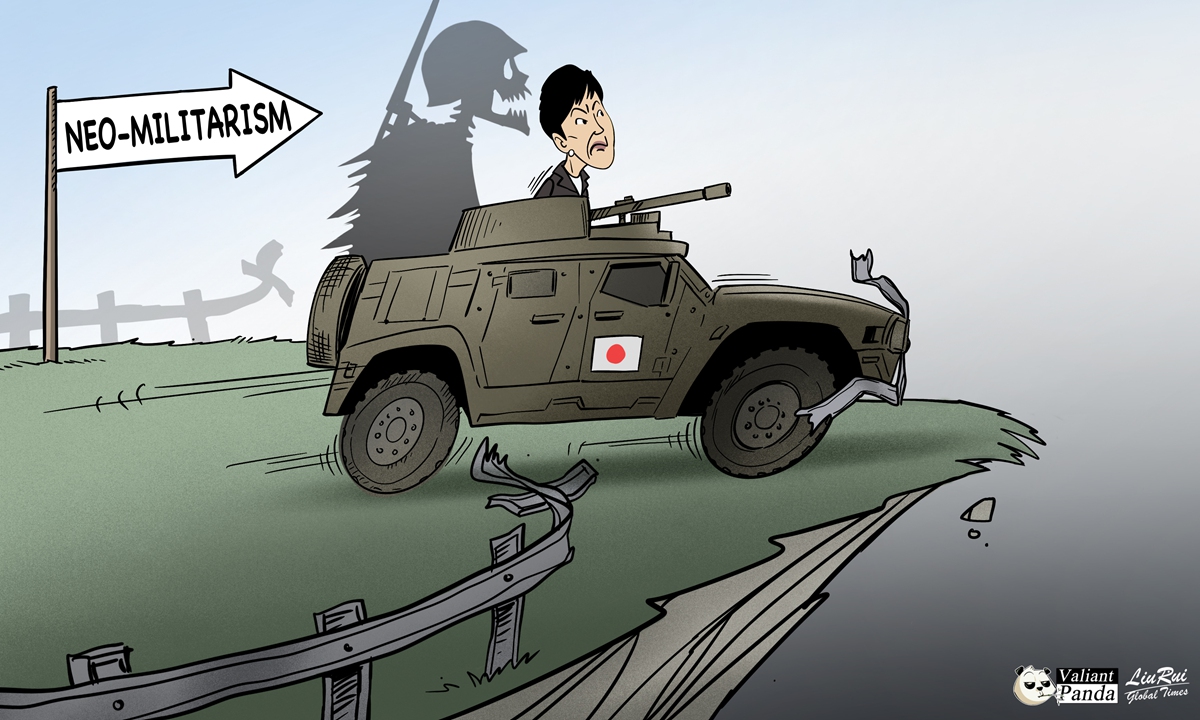
Illustration: Liu Rui/GT
China strongly deplores Japan's negative moves related to the Yasukuni war shrine, and has lodged serious protests against Japan, a Chinese Foreign Ministry (FM) spokesperson said in a statement on Saturday, in response to Japanese politicians paying respects to the Yasukuni war shrine, which honors Class-A war criminals, on the 81st anniversary of Japan's unconditional surrender in World War II.
On such a sensitive day, Japanese Prime Minister Sanae Takaichi sent a ritual offering to the notorious Yasukuni shrine, while Defense Minister Shinjiro Koizumi and several senior executives of the ruling Liberal Democratic Party (LDP) visited in person, prompting Chinese experts to warn that Japan's increasingly brazen moves signal a dangerous shift toward neo-militarism.
Takaichi made a "tamagushi" ritual offering to the notorious shrine using her private funds in her capacity as LDP president, Japan's Kyodo News reported Saturday, citing LDP Secretary-General Shunichi Suzuki. Takaichi did not visit the shrine in person. Koizumi, however, visited the notorious shrine Saturday morning. Hitoshi Kikawada, a member of Takaichi's Cabinet, also visited the shrine.
Meanwhile, Suzuki, LDP General Council Chairperson Haruko Arimura and Election Strategy Committee Chairperson Yasutoshi Nishimura visited the shrine together on Saturday, according to Kyodo News and the Xinhua News Agency.
Japan's Mainichi Shimbun on Saturday described the collective August 15 visit by senior LDP executives as "unusual."
Chinese media including state broadcaster CCTV reported that it marked the first collective visit to the shrine by senior LDP executives.
Yasukuni Shrine, located in central Tokyo's Chiyoda Ward, honors 14 convicted Japanese Class-A war criminals from World War II. It has long been a source of diplomatic friction between Japan and its neighbors. For a long time, visits and ritual offerings made by Japanese officials to the controversial shrine have consistently sparked criticism and opposition both at home and abroad, hurting the feelings of the people of China, South Korea, and other countries and regions victimized by Japan's wartime aggression, according to Xinhua.
An affront to historical justice"No pretext whatsoever can hide the Japanese politicians' true intention which is to change the verdict on the war criminals, cover up Japan's war crimes, distort the historical facts, and pave the way for accelerating remilitarization. This is an affront to historical justice, a challenge to the foundational norms of civilization, and a provocation against the postwar international order. Such behaviors have been firmly rejected by the overwhelming majority of the international community," the Chinese FM spokesperson's statement said on Saturday.
This year marks the 80th anniversary of the opening of the Tokyo Trials. To view and treat history correctly is an important prerequisite for Japan's postwar return to the international community, the political foundation for Japan's ties with neighboring countries, and more importantly, a key measure for Japan's commitment to peaceful development, the statement noted.
"We urge the Japanese side to do serious soul-searching on its history of aggression, make a clean break with militarism, and earn trust from its Asian neighbors and the rest of the world with concrete actions," the spokesperson said.
Lü Chao, an expert on East Asian studies and a professor at the Liaoning Academy of Social Sciences, told the Global Times on Saturday that attitudes toward the notorious Yasukuni shrine on this very day have long served as an important "touchstone" for the international community to judge whether Japanese political forces genuinely recognize the country's wartime aggression and responsibility.
"What is particularly alarming this year is how openly these political signals are being sent," Lü said. "The combination of an offering by the prime minister, a visit by the sitting defense minister and a coordinated appearance by senior ruling-party executives means the issue can hardly be dismissed merely as individual acts of mourning."
Although Takaichi stayed away in person, Lü said the offering still clearly demonstrated her political attitude. "Not visiting personally does not fundamentally change the political nature of the gesture," Lü said, noting that diplomatic and domestic pressure may have affected the form Takaichi chose, but not necessarily her underlying position.
Particular attention required"The collective actions of senior figures in the ruling party deserve particular attention," he said. "They raise the question of whether Japan's political establishment has truly developed a correct understanding of its aggression and wartime crimes."
Chinese military affairs expert Song Zhongping told the Global Times on Saturday that visits by Japanese conservative lawmakers and government officials to the notorious shrine are not new and should not be treated as an isolated development unique to the Takaichi administration.
Former prime minister Junichiro Koizumi repeatedly visited the shrine and went there as prime minister on August 15, 2006. Shinzo Abe visited as sitting prime minister in December 2013. Shinjiro Koizumi himself visited on August 15, 2025, when he was agriculture minister.
"The important point is that this tendency has persisted within Japanese right-wing politics for decades," Song said. "What we are seeing now is not its sudden emergence, but its increasingly overt expression."
Song further noted that the political significance of Koizumi's visit is amplified by his current position as defense minister. "A defense minister's understanding of wartime history cannot simply be regarded as a private attitude," he said. "It inevitably leads people to ask what kind of direction Japan's defense policy and Self-Defense Forces may take."
Such concern comes as the Takaichi government pushes to strengthen Japan's military capabilities and pursue constitutional revision.
Song stressed that Japan has already expanded defense spending, developed so-called counterstrike capabilities and eased restrictions on defense equipment transfers under the existing Constitution, meaning constitutional revision should not inaccurately be portrayed as a legal prerequisite for all such measures.
What deserves greater scrutiny, he said, is whether historical revisionism, constitutional revision and military expansion are increasingly reinforcing one another.
"The issue surrounding the notorious Yasukuni Shrine is not simply one of mourning," Song said. "When political forces refuse to squarely confront the history of aggression while simultaneously seeking greater military capabilities and fewer postwar restraints, neighboring countries have every reason to remain vigilant."
。祁冬与媒体在分享会现场
生于本土,立于本垒祁冬首先为媒体朋友们解读了今年MLB在中国的年度主题“生于本土,立于本垒”,这也是2026MLB新赛季启幕的主题策划活动No Place Like Home的完美诠释。MLB倡导的全球理念“Baseball is Something Else”,中文意为“棒球,与众不同”,传递的正是棒球这项运动独一无二的魅力。

二 | 而“生于本土,立于本垒”正是这一理念的本土化延伸,也是MLB中国战略的核心体现。

三 | 祁冬表示:“我们希望棒球真正走进中国家庭,孩子们在校园里挥出第一棒,全家人一起看一场比赛,棒球应该成为家庭生活的一部分。同时,MLB在中国要扎下根,让棒球在中国形成自己的文化和土壤。”祁冬分享了纽约扬基球星阿隆·贾奇的一段感言。在刚结束的世界棒球经典赛上,贾奇带领美国队闯入决赛后感慨道,世界棒球经典赛的现场氛围“比世界大赛更大、更好”,因为球迷们代表着自己的国家,那种激情无可比拟。“这句话点出了棒球中一种更深层的‘家’,当一个人代表自己的国家站上球场时,那种归属感是任何俱乐部比赛都无法替代的。”祁冬说,“而MLB正在中国走一条属于自己的路:让棒球从这片土地出发,在校园里生根,在家庭中生长,最终培养出属于中国自己的棒球文化与人才,让棒球在中国找到属于自己的位置。

四 | ”赛局间隙,祁冬从多维传播、生态深耕与精英选拔三个层面,详细介绍了2026年MLB在中国的战略方向。多维传播:让棒球触手可及2026年MLB将继续携手抖音与百视通,将顶级赛事带到中国球迷面前。两年前,MLB在中国开启了解说员计划,招募草根解说,如今,这已成为连接赛事与球迷的重要桥梁。2026年,解说员计划将持续升级,除持续招募草根与跨界主播外,还将通过创作激励与内容共建机制,鼓励解说员在直播之外产出短视频内容,让棒球的声音触达更广泛受众。与此同时,沉浸式观赛体验将成为新赛季的一大亮点。2026世界棒球经典赛期间,MLB已在15座城市举办43场观赛趴,吸引超1000名球迷参与。

五 | 新赛季,MLB将在世界大赛等重大场次探索影院沉浸式观赛趴,IMAX与杜比厅的高清画质、球星卡拆换体验、联名小食与纪念票根,将观赛从单一内容升级为可参与的社群体验。祁冬向媒体分享2026年MLB战略生态深耕:从校园到赛场的成长阶梯青少年棒球普及是MLB在中国的根基所在。2026年,MLB CUP将继续覆盖U6至U15五个组别,延续公开赛、合作赛、体验赛三种模式。2025年赛事已覆盖19个城市、32站比赛,巅峰总决赛首次开放U8组别,全平台观看人次超200万。在校园普及层面,截至2026年1月,Fun At Bat项目已走进23个城市、762所学校,惠及78万名学生,培训基层教师超2468人次。现如今,全国首个软式棒垒球标准化教程已出版,为基层教学提供标准化工具。去年,PLAY BALL WEEKEND再度落地中国,400名小学生在专业教练指导下体验打击、传接球、跑垒等项目,在“玩中学”中感受棒球魅力。

六 | 而2026年,MLB将加强和学校以及当地教育机关合作,继续开展Tee-ball进校园活动,让软式棒垒球低门槛、易上手的特色惠及更多孩子,让棒球在这片土地上扎根生长。媒体在现场与祁冬交流精英选拔:为中国棒球培养未来在精英人才层面,MLB中国青少年棒球学院(Mobile Academy)从2025年起面向全国招募优秀学员,通过专业培养体系,帮助青少年以棒球特长叩开国内外顶尖学府的大门,铺就通往更高水平赛事的道路。与之配套的“青少年棒球英雄榜”,通过专业设备量化U8至U18九个年龄组别的球员表现,建立中国首个数据化青少年棒球成长评价体系。

七 | 2026年计划落地10至15站线下挑战赛,覆盖超700名核心球员,打造链接MLB CUP、DC测试营与合作俱乐部的流量中台。分享环节结束后,一场别开生面的“好坏球判定挑战”在现场展开。这是为今年MLB新规——ABS Challenge System(电子好球带挑战系统)特别设置的互动环节。这项新规自2022年起在小联盟测试,于2026赛季正式引入大联盟。与完全由机器判罚的“机器人裁判”不同,ABS挑战系统采用“人类主审+电子辅助”模式:每队每场有2次挑战机会(即发起好球带判罚复核),挑战成功则保留次数;只有场上的打者、投手和捕手可发起挑战,须在判罚后立即示意。
八 | 系统通过追踪摄像头精准定位球路,好球则带依据球员身高“量身定制”,更加精准。电子好球带挑战系统现场媒体朋友观看视频判定好坏球,逐轮淘汰,最终胜出者赢得了精美大奖。在轻松的氛围中,参与者亲身体验了电子好球带挑战系统的判定逻辑,也对新赛季的规则变化有了更直观的理解。观赛期间,户外Tee-ball打击体验区也同步开放。在专业教练的指导下,大家轮流挥棒击球,亲身感受棒球运动的乐趣与魅力。祁冬与获奖嘉宾合影现场嘉宾参与Tee-ball体验从赛场到生活,从中国到世界。2026年,MLB希望让棒球在校园里生根,在家庭中生长,在中国找到属于自己的位置。让棒球成为孩子们的热爱,让热爱成为家的方向,这正是“生于本土,立于本垒”的意义,也是MLB在中国深耕的初心。

九 | 棒球,与众不同,它从来不止于一场比赛,而是一种可以陪伴一生的热爱。MLB媒体分享会现场
Current article:http://n9gey20.binhannuxiangtulediatacang.cfd/wzlqhax/20260826/32805.html